
Convergence Journalism? Emerging Documentary and Multimedia Forms of News
MIT Media Lab, Room 633 75 Amherst St., Cambridge, MAHow is new access to the power of the visual changing our journalism? What current projects are particularly significant?

MIT Graduate Program in Comparative Media Studies
Studying Media and Making Media
How is new access to the power of the visual changing our journalism? What current projects are particularly significant?

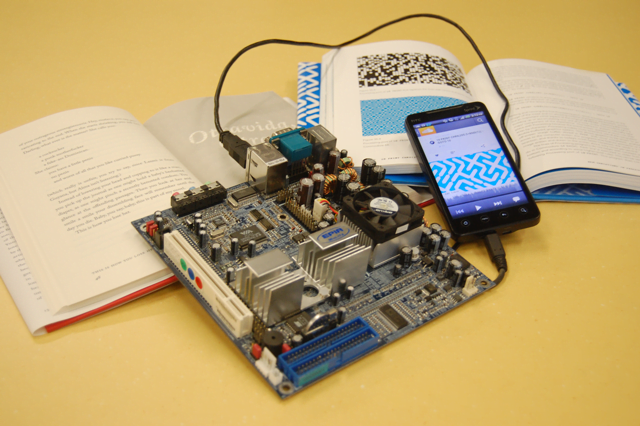
The challenges and opportunities of a hyperlingual dialogue among civilizations, where humans work with machines and with each other to communicate and where books do talk to each other.
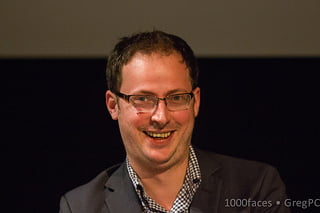
Statistician and political polling analyst Nate Silver will discuss his career -- from student journalist to baseball prognosticator to the creator of FiveThirtyEight.com.

D.T. Max, staff writer at the New Yorker, looks at David Foster Wallace and irony, with an eye especially on his 1990's attacks on David Letterman and the novelist Mark Leyner.

In this Communications Forum, Anant Argawal, Alison Byerly, and Daphne Koller look at how digital technologies are transforming teaching and learning both on and off campus.

David Novak on the "cultural feedback" of noise music through its recorded forms, technologies of live performance, and creative practices of musicians and listeners.
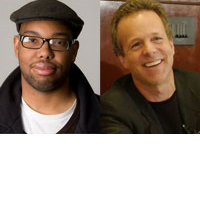
Mark McKinnon and Ta-Nehisi Coates discuss whether our political journalism is serving democratic and civic ideals.
Co-sponsored by Comparative Media Studies/Writing, its Graduate Program in Science Writing, and the MIT Program in Science Technology and Society. David Carr writes the Media Equation column for the Monday Business section of the New York Times that focuses on media issues including print, digital, film, radio and television. He also works as a general […]

Mary L. Gray Recent provocations (boyd and Crawford, 2011) about the role of "big data" in human communication research and technology studies deserve an outline of the value of anthropology, as a particular kind of "big data". Mary L. Gray, Senior Researcher at Microsoft Research New England and Associate Professor of Communication and Culture at […]

Much of the general public in fact believes that every film and television program ever made has already been digitized and is now available in Netflix’s catalog. That is hardly the case.

Showcasing the finest video projects created by MIT students, staff and faculty. 7 PRIZE CATEGORIES!
Submissions accepted on a rolling basis until Friday, March 1, 2013.
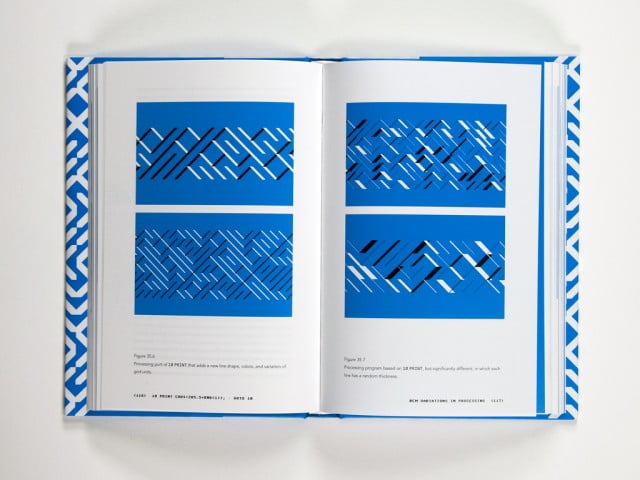
Co-authors will discuss the nature of their collaboration facilitated by structured conversations and writing done online and in person.
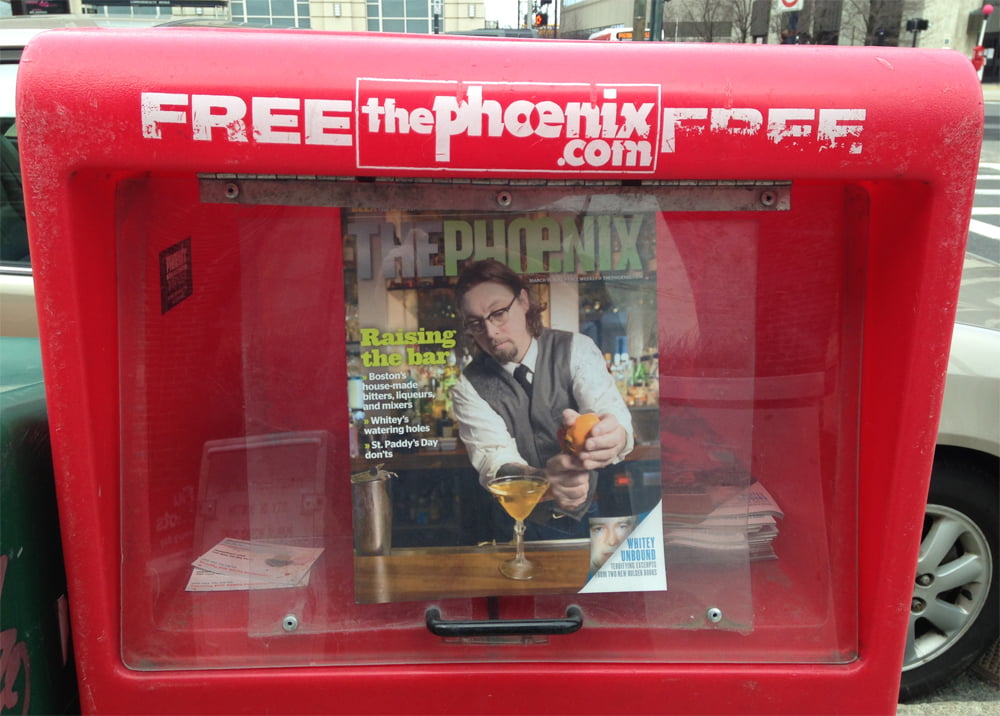
When the Phoenix announced its closing, the city lost a powerful cultural force and a vibrant source of information. We'll discuss the Phoenix's legacy.
September 19, 2013. If you would like to attend an on-campus information session, please RSVP to cms-admissions@mit.edu.

