
2009 Julius Schwartz Lecture with J. Michael Straczynski
MIT Building 10, Room 250 222 Memorial Drive, Cambridge, MAThe second annual Julius Schwartz Lecture brings J. Michael Straczynski, the creator of the cult science fiction hit Babylon 5.

MIT Graduate Program in Comparative Media Studies
Studying Media and Making Media
The second annual Julius Schwartz Lecture brings J. Michael Straczynski, the creator of the cult science fiction hit Babylon 5.
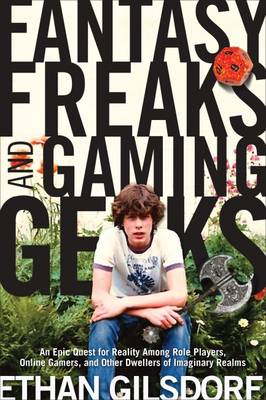
Ethan Gilsdorf will discuss some of the themes of his new book, Fantasy Freaks and Gaming Geeks: An Epic Quest for Reality Among Role Players, Online Gamers, and Other Dwellers of Imaginary Realms.

Hannah Rose Shell screens and discusses her film-in-progress, called Blind, about the phenomenology of camouflage.

The election of an African-American president in Nov. 2008 has been hailed as a transforming event. But has Obama's ascension transformed anything?

Elisa Kreisinger is a video remix artist, hacktivst and writer. She co-edits the blog, PoliticalRemixVideo.com.

Richard Rouse on the ways cinematic techniques can be used in gameplay to create even more stimulating experiences for gamers.

What are the benefits and dangers of a confusion between the private creativity and the public career elements of a writer's life?
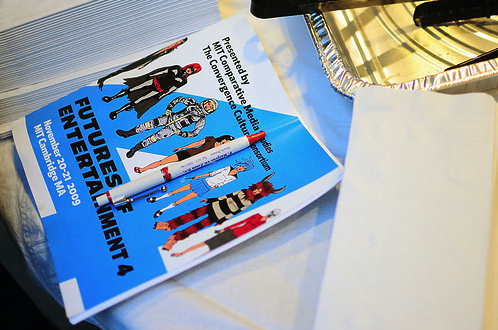
Futures of Entertainment 4 once again brings together key industry leaders and academic scholars who are shaping these new directions in our culture.

Siva Vaidhyanathan asks, what are we really gaining and losing by inviting Google to be the lens through which we view the world?

Angela Ndalianis analyze how Las Vegas -- a city-as-monument to entertainment and leisure culture -- has appropriated tropes and modes of engagement taken from pre-20th Century high culture traditions of the Church and aristocracy.

Stephen Duncombe asks, does the traditional truth-revealing role of critical media practice still have any political relevance?

How can media studies be both in and of the emergent media forms, and yet retain a creative and critical distance from them?

If virtual world users' claims to citizenship and sovereignty within those worlds are to be taken seriously, so too must the question of "gray collar" or semi-legal virtual laborers.
Ever played a board game and thought it was missing something? That you could make it better?

Issues around gender and gaming, as well as an opportunity for female MIT students who play digital games to come together to talk and play.

