
Remixing Shakespeare
MIT Building 3, Room 270 33 Massachusetts Ave (Rear), Cambridge, MANew technologies are enabling forms of borrowing, appropriation and "remixing" of media materials in exciting, provocative ways.

MIT Graduate Program in Comparative Media Studies
Studying Media and Making Media
New technologies are enabling forms of borrowing, appropriation and "remixing" of media materials in exciting, provocative ways.
Today evangelical groups are active in all media, from the Internet and cellular telephones to print journalism, broadcasting, film, and multi-media entertainment

Is it true, as many have suggested, that the influence of newspapers and television has declined in the digital era? Have the media become more partisan and polarized?
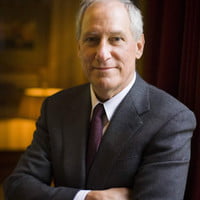
Robert Darnton on the history of the book, the future of books and reading, and his vision of how new and old media can reinforce each other.

With Johanna Blakley, deputy director of the Norman Lear Center at USC; David Carr, media and culture writer for the New York Times; and Stephen Duncombe, associate professor at NYU.

The election of an African-American president in Nov. 2008 has been hailed as a transforming event. But has Obama's ascension transformed anything?
Minnesota Public Radio's Linda Fantin and Sunlight Foundation's Ellen Miller discuss how new ways of gathering and presenting information are evolving from a nexus of government openness and digital connectedness.

Is our emerging digital culture partly a return to practices and ways of thinking that were central to human societies before the advent of the printing press?

Henry Jenkins returns to talk about his scholarship on digital culture, founding Comparative Media Studies, and experiences as a teacher and housemaster.

Johanna Drucker asks, "Are the standard metrics and conventions developed for analysis of empirical inquiries fundamentally at odds with tenets of traditional humanistic interpretation?"
David Carr and Dan Kennedy discuss the best and the worst examples of news on the net, online-only news sites, hyperlocal news and collaborative journalism, business models for online newspapers, and the impact of social media on journalism.

With Alison Byerly and Steven Pinker, we ask how digital tools and systems have already begun to transform humanistic education.

Micah Sifry and Daniel Schuman address the question: "What are the legal dangers for publishing secrets in the crowdsourced era?"

What new media tools and strategies can be used to help everyone better prepare for the unique communications challenges of slow-moving crises?

As newspapers continue their mutation into digital formats and as news and information are available from a seeming infinity of websites, what do we actually know about the dynamics of news-consumption online?

