Town Meeting
MIT Building 4, Room 231 Cambridge, MAFor the CMS/W family only, this is the annual discussion between the program's community members and directors.

MIT Graduate Program in Comparative Media Studies
Studying Media and Making Media
For the CMS/W family only, this is the annual discussion between the program's community members and directors.

Join us at 3pm on November 21, here at cmsw.mit.edu! RSVP not required, but sign up for a reminder.
With Lev Manovich, author of the seminal The Language of New Media, and MIT's Fox Harrell and Nick Montfort.

With Raney Aronson of FRONTLINE, the Guardian's multimedia special projects editor Francesca Panetta, documentary filmmaker Katerina Cizek, and Jason Spingarn-Kopf of the New York Times' Op-Docs.
The mostly-female cast is generally portrayed as being extremely competent and working collectively to solve problems, even as the films fall back on formulaic personality conflicts.
Let's talk about the impact of computation on the humanities, about where it can takes us, and about what it means to use this lens on our scholarship. And who's doing what where in DH at MIT?

"A knitting pattern is actually a more or less complex algorithm with the difference being that the output is directly wearable like 3D printing."

Digitally based knowledge has reevaluate their existing pedagogical methods. In this workshop, we investigate one possible solution to this challenge: digital annotation.

Join Bobbie Chase, Editorial Director of DC Comics, and comic book writer Marjorie Liu (Monstress, Astonishing X-Men, Black Widow) as they discuss the current and future state of the comic book medium.

Theresa Rojas examines the prolific, heavily tattooed Kat Von D, who offers an aesthetic that challenges tattoo culture and notions of the “monstrous body”.

okidOkO's Gonzalo Frasca shows us how we should create games that are both useful and effective inside and outside the classroom.

Computational geneticist Pardis Sabeti and energy studies expert Jessika Trancik will discuss their careers and the outlook for women in science in the 21st century.

Catherine E. Clark on how "the utopian rhetoric that accompanied the Vidéothèque’s creation helps illuminate and call into question the utopian promises of the much more recent revolution in digital history."
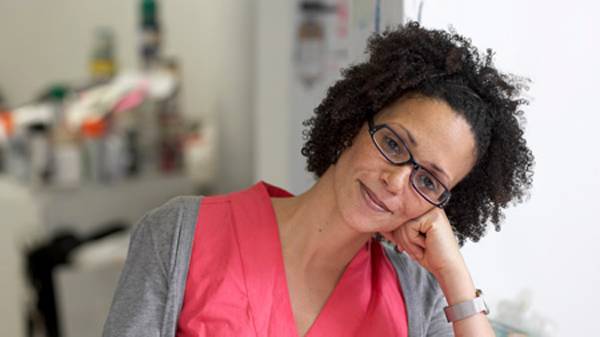
Coco Fusco explores the work of performance artists from the 1980s to the present and examines how the Cuban state has wielded influence over performance.

A panel on the history and potential for documentarians to co-create with citizens, social scientists, technologists and performing artists, with the aim to both create artful meaning and foster concrete political action.

